Ten years on: Reach's new volunteering platform
A decade after launching our online service connecting people, skills and good causes, we’ve launched a new version of our platform. How are we still here, why does it matter and where are we heading next?


Ten years ago…
In 2015, we launched our digital platform. It was a huge deal at the time: we jumped from a manual service (think teams of volunteers patiently sending every new volunteer a list of possible matches) to an online self service platform. With an Innovation in Giving Award from Nesta and the balance from Dulverton Trust (thank you!), we made our big leap into the unknown. I vividly recall the whole team standing around a desktop, cheering as the first volunteer uploaded their profile.
Our new platform is an evolution rather than a revolution. We rebuilt it to stay on a supported software version, and we seized the opportunity to make further improvements to the user experience. The service has a beautiful new look and feel, designed and illustrated by talented volunteers. But most exciting is the flexibility and power of the new system, meaning that we can innovate much more easily. It's like switching up from Duplo to Lego!
Still here - and thriving
A decade is a long time on the internet. Back in 2015, Twitter was a place of kindness and curiosity, and digital technology promised to make the world better. Since then, we have seen countless ‘skills matching’ platforms come and go, and large organisations struggle with declining volunteer numbers.
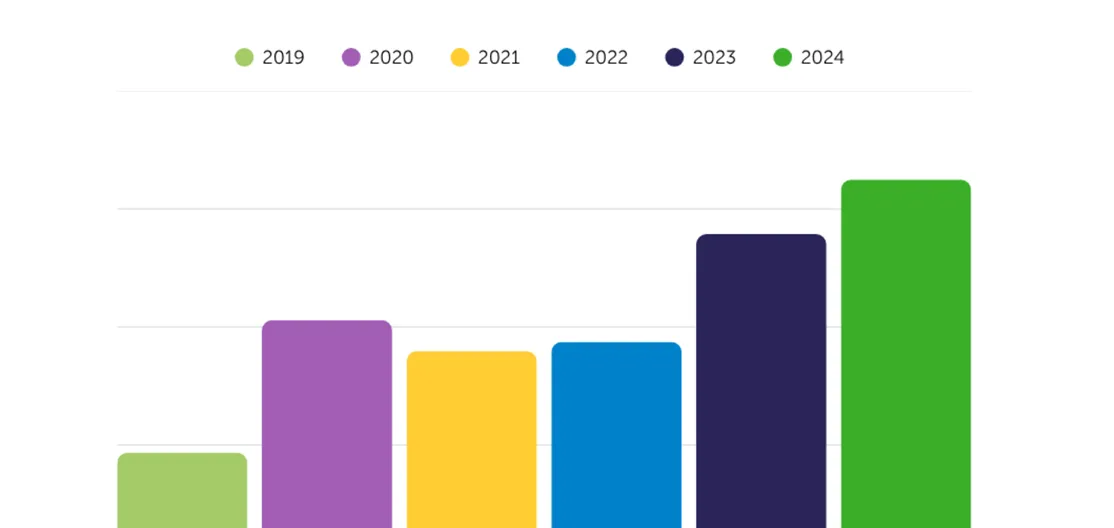
So I am very proud that our service, supported by a tiny team, has quietly carried on, not only surviving but thriving. Last year, 16,000 volunteers registered with Reach - four times pre-pandemic numbers. They are wonderfully diverse in terms of age, ethnicity, skills and interests, and proof that people do in fact, care, and want to do something meaningful about it. Equally exciting, the number of volunteer-led groups using our service has increased tenfold in the last five years.
The secret of our longevity
From the outset, we designed the service around the real needs of charities and volunteers. We have done A LOT of user research and testing over the years, and we developed a working knowledge of service design.
But we also look beyond the ‘what’ and ‘how’ to the ‘why’. User-centred design helps build something easy to use, reducing friction and drop-off rates. But with volunteering, the ‘why’ matters deeply. Why do people want to volunteer? What motivates them to give their hard-earned expertise for free? And for over stretched organisations, what will really make a difference to them, and help them address their priorities?
What does this look like in practice? Volunteers are motivated to use their skills to make a difference, so when organisations upload a role, we ask them to describe the impact that the volunteer will have. Communication breakdown is common in volunteer recruitment, so we built on-platform messaging and nudges to respond. When organisations recruit volunteers with specialist expertise, the volunteer can help scope the work, so we designed an enquiry option to encourage dialogue. And for the kind of roles we support, being proactive yields results, so organisations can search volunteer profiles and ask them to consider their role. As a result, organisations post roles that are flexible, purpose-led and participatory. This has attracted record numbers of volunteers, over 60% of whom are under 40. I have written here about this new kind of volunteering, which is thriving.
The size and diversity of our community make serendipity a feature. Anyone who has worked with volunteers in a setting which allows them agency will know of the magic of chance collaborations - unforeseen possibilities that germinate and take root. Our service has flourished because it’s powered by the creativity and energy of newly emerging grassroots groups, established charities, seasoned retirees and talented young people; and the interactions between them all.
What next?
With our more flexible platform, we’re ready to start innovating in earnest. Once we’ve fine-tuned the new setup, we’ll begin exploring new features.
One idea is an ‘Ask a question’ feature for quick expert conversations. Organisations often need a short chat to troubleshoot a problem or test an idea, and with 16,000 helpful volunteers with a huge array of expertise, there’s enormous potential for human-to-human advice.
We also want to experiment with building community. We know people benefit from connection when taking their first steps into action — could we create communities around themes like climate action?
And as our network organically connects people with expertise and networks with organisations furthest from power and wealth, we’re asking: how can we facilitate that even better?
From ‘Do To’ to ‘Do With’
The coming years are going to be tough - climate impacts, polarisation, growing inequality, struggling public services and more. It’s going to take all of us. It can be hard to see the path through, but one thing is certain: the more people who actively participate in building a strong civic core, the more likely we are to create a kinder, fairer, more sustainable world. And charities and community groups can achieve so much more when people share their expertise.
Many people who feel overwhelmed by the state of the world discover that they can make a bigger contribution than they imagined by joining genuinely collaborative initiatives — finding both solace and energy in working alongside others who care.
We see ourselves as part of a wider movement, from the King’s Fund #DoWith to Jon Alexander’s Citizens, that promotes bottom-up collective power and participation.
And finally…
You’ll be unsurprised to learn that there is not much money in supporting volunteers and small charities. Unfortunately, funding for small national infrastructure organisations like Reach has shrunk significantly in the last few years. So, if you are reading this and can introduce us to anyone who might be interested in supporting our next phase, please get in touch on [email protected] .
More from Reach
Volunteering is thriving - Just not where you’ve been looking

Trusts, foundations and philanthropists
Motivations for volunteering: Exploring the rise in volunteering at Reach